Tiberias & the Sea of Galilee


Intro
Tiberias is located in northern Israel, about an hour and a half’s drive from Tel Aviv. Named by Herod Antipas after the Roman Emperor Tiberius, the city was founded in the 1st century AD and later became one of Judaism’s Four Holy Cities, alongside Jerusalem, Safed, and Hebron.
The region is also sacred to Christians, as much of Jesus’ ministry took place around the Sea of Galilee, and to the Druze, whose holiest shrine, Nabi Shu’ayb—the traditional tomb of the Prophet Jethro—is located on the northern slopes of the Horns of Hattin.
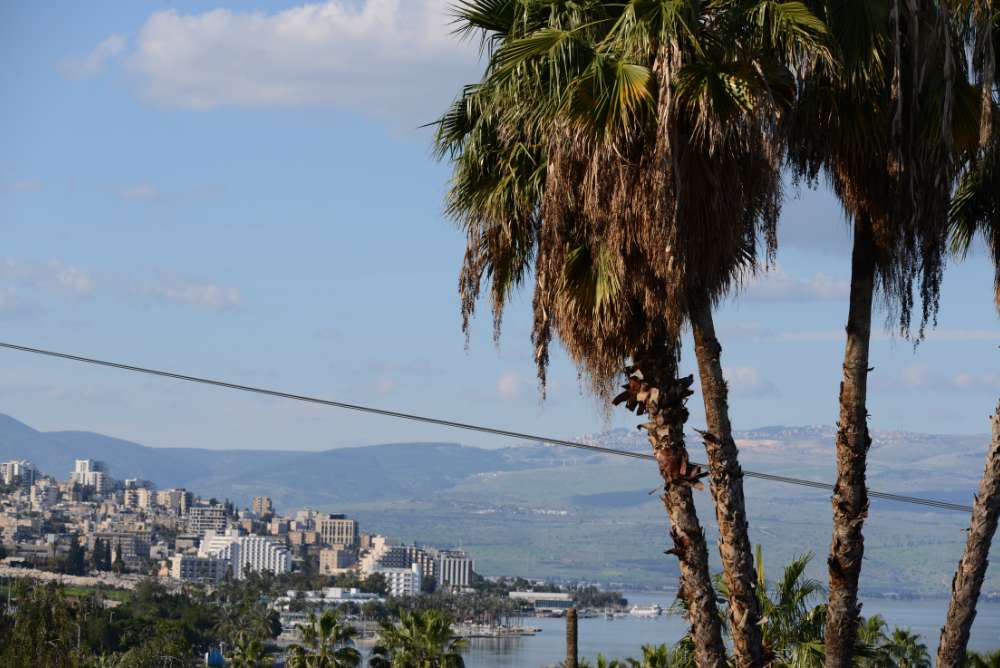
Tiberias sits on the western shore of the Sea of Galilee—Kinneret in Hebrew—Israel’s largest and most famous natural freshwater reservoir. It is also the lowest freshwater lake on Earth, second in elevation only to the salty Dead Sea. Israelis love the Sea of Galilee as one of the country’s best budget camping & BBQ destinations.
And here’s a friendly warning: the Sea of Galilee and Jordan Valley can get seriously hot. Summer temperatures may climb toward 50°C in extreme conditions, so water, a hat, and sunscreen are your best friends.
If you want to explore everything on this list, allow yourself a few days and definitely consider staying overnight.
Expect nothing short of an amazing experience.


Yardenit: A Spiritual Journey to the Jordan River
Our visit to Tiberias, located in northern Israel about an hour’s drive from Tel Aviv, took place on a blazing hot summer weekend — and it was nothing short of amazing.
We began at Yardenit, a beautiful baptism site on the banks of the Jordan River at Kibbutz Kinneret, at the southern tip of the Sea of Galilee. Each year, over half a million Christian pilgrims arrive here to experience the peace and spiritual energy of the waters where Jesus is believed to have been baptized by John the Baptist. The heartfelt responses of the visitors were moving and uplifting.
There is another traditional baptism site near Jericho, called Qasr al-Yahud, considered by many to be the true site. However, this stretch of the Jordan River, located in southern Israel just a few kilometers north of the Dead Sea, marks the border between Israel and Jordan. For many years, this area became, de facto, a no-man’s-land due to security concerns and restricted access, making Qasr al-Yahud a relatively less-visited pilgrimage site.
Now, back to Yardenit, visitors are welcomed by a passage from the Gospel of Mark:
“In those days Jesus came from Nazareth of Galilee and was baptized by John in the Jordan. And when he came up out of the water, immediately he saw the heavens opened and the Spirit descending upon him like a dove. And a voice came from heaven, ‘You are my beloved Son; with you I am well pleased.’” (Mark 1:9–11)
The site is free to enter and fully accessible, with ramps and handrails. Baptism robes can be rented or purchased on-site. There are quiet areas for prayer and reflection, and the staff is highly respectful of visitors’ religious sentiments. The natural surroundings remain serene and unspoiled, with lush greenery and wildlife like fish and otters gracing the riverbanks.


Tiberias – Church of the Multiplication
The Church of the Multiplication, also known as the Church of the Loaves and Fish, is located in Tabgha, about a 15-minute drive north of Yardenit, on the northwestern shore of the Sea of Galilee (Lake Kinneret). The church commemorates the miracle in which Jesus multiplied five loaves and two fish to feed a crowd of 5,000, as described in Mark 6:30–46. It is also believed to be the site where Jesus appeared for the fourth time after His resurrection.
According to the Gospel, Jesus and His disciples had sailed to a remote area seeking rest, but a large crowd followed them. As evening approached and food was scarce, Jesus miraculously fed the multitudes with just a few loaves and fish. Soon after, He walked on these very waters — a moment that adds to the spiritual resonance of the site.
While the Bible does not mention a specific geographic location beyond “a remote place on the shores of Galilee,” the tradition identifies Tabgha as the site. The original church was built here around 350 AD, and although it has been destroyed and rebuilt several times, the current structure is a modern church built over the ancient remains.
Inside, near the altar, is a famous mosaic depicting two fish flanking a basket of loaves, symbolizing the miracle. Beneath the altar lies a large stone believed to be where Jesus placed the loaves and fish during his blessing. A glass floor panel reveals the foundations of the early church. In the courtyard, you’ll also find excavated basalt stone fonts and ancient oil presses, offering a glimpse into the area’s historical life.


The Church of the Beatitudes
Overlooking the Sea of Galilee from a serene hilltop, the Church of the Beatitudes is a Roman Catholic site located on Mount of Beatitudes, just a short drive from Tabgha and near the ruins of ancient Capernaum, the town of Jesus. Built between 1936 and 1938, the church marks the traditional location where Jesus delivered the “Sermon on the Mount”, one of His most profound teachings, as recorded in the Gospel of Matthew.
The Beatitudes—a series of eight blessings—begin with the Latin word “beati”, meaning “happy” or “blessed.” Each Beatitude contains two parts: a condition and its spiritual reward. While some phrases echo the Hebrew Bible, Jesus’ words elevated them to a message of deep compassion, humility, and spiritual growth—focusing on love rather than power, on mercy rather than judgment.
Matthew 5:3–12 reads:
(3) Blessed are the poor in spirit, for theirs is the Kingdom of Heaven.
(4) Blessed are those who mourn, for they will be comforted.
(5) Blessed are the meek, for they will inherit the Earth.
(6) Blessed are those who hunger and thirst for righteousness, for they will be satisfied.
(7) Blessed are the merciful, for they will be shown mercy.
(8) Blessed are the pure in heart, for they will see God.
(9) Blessed are the peacemakers, for they will be called children of God.
(10) Blessed are those who are persecuted because of righteousness, for theirs is the Kingdom of Heaven.
(11) Blessed are you when people insult you, persecute you, and falsely say all kinds of evil against you because of me.
(12) Rejoice and be glad, because great is your reward in heaven, for in the same way they persecuted the prophets who were before you.
The entire site offers a surreal and peaceful panorama of the Galilee, arguably the most breathtaking view in the region.
The gardens surrounding the church are meticulously maintained, adding to the atmosphere of reflection and tranquility. The church itself is modest and elegant, reflecting the spirit of the message it commemorates.
The Church of the Holy Apostles – Capernaum
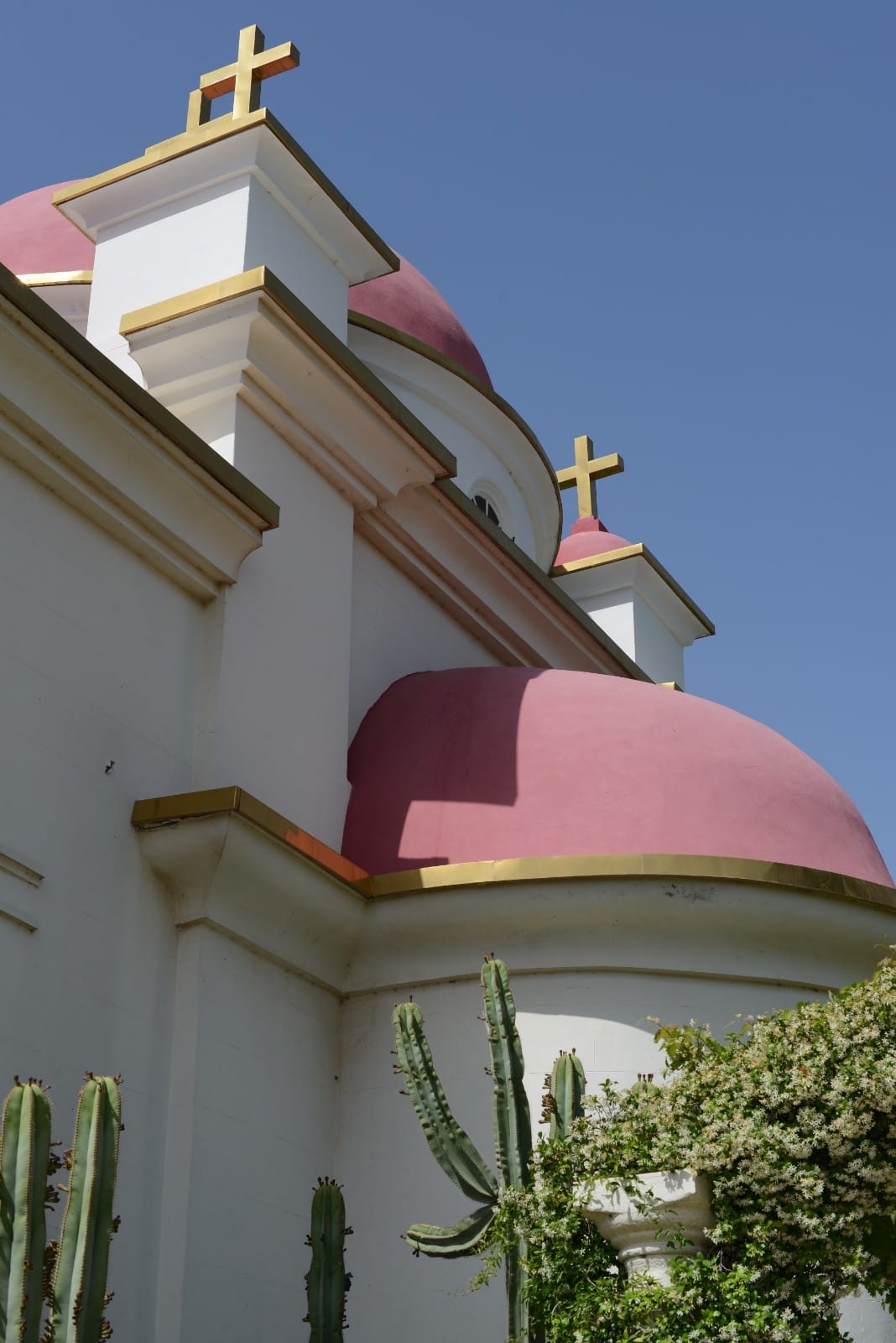
The Church of the Holy Apostles, belonging to the Greek Orthodox tradition, is located in Capernaum (Hebrew: Kfar Nachum, meaning “Village of the Merciful”), on the quiet and secluded northeastern shores of the Sea of Galilee. Easily recognized by its 12 pink domes, the church stands in a tranquil spot, somewhat off the beaten path, yet deeply connected to the Gospel Trail (also called Jesus Trail)—the route believed to trace Jesus’ steps through the Galilee.
Built in 1931, the church was largely abandoned between then and 1969, as it lay in a no-man’s-land between the borders of Israel and Syria. Since then, it has been lovingly restored. Its interior features striking Byzantine-style frescoes and iconography, all created in Greece and later applied to the church walls, adding a rich spiritual and artistic ambiance.
Every year, on January 18th, the church hosts a baptismal ceremony celebrating Epiphany, held just meters from the church itself near the water’s edge.
Geographically, the Church is located south of the Capernaum National Park and north of the ruins of the ancient village of Capernaum, although the two areas are not physically connected for foot access.
Capernaum, often mentioned in the Gospels, is traditionally recognized as Jesus’ adopted hometown. According to Christian belief, it is where He lived, and where He began His public ministry, preaching in the synagogue of Capernaum—a key spiritual site for pilgrims from around the world.


Capernaum – Jesus’ Town
The ancient village of Capernaum, often referred to as “Jesus’ Town”, is bordered on its northern side by the Greek Orthodox Church located in Capernaum National Park, as mentioned earlier. The earliest signs of settlement in the village date back to the 2nd century BCE, with continuous habitation through the early Roman period—the time of Jesus’ ministry—into the Byzantine era, until it was destroyed by a massive earthquake in 749 CE.


The site was identified in 1838 by Edward Robinson, a pioneering American biblical archaeologist, also known as the “Father of Biblical Geography,” who recognized the ruins as biblical Capernaum. Excavations began in 1905 under German archaeologists Heinrich Kohl and Carl Watzinger, and were resumed two years later by the Franciscan Order (a Catholic religious group founded in 1209). Among the key discoveries was the ancient Jewish synagogue, believed to have been built atop the synagogue where Jesus once taught. Nearby, in the town of Magdala, another synagogue has been uncovered where He may also have preached.
The name “Kfar Nachum” (Hebrew for “Village of Comfort/merciful”) reflects its biblical and spiritual identity. According to Christian tradition, this is the place where Jesus lived—most likely in the house of St. Peter—and taught in the synagogue for at least two years. It is also the site of many miracles, including the healing of a man possessed by an unclean spirit.
As written in Luke 4:31–36:
“He went down to Capernaum, a city in Galilee, and was teaching them on the Sabbath. They were astounded at his teaching, because he spoke with authority. In the synagogue there was a man who had the spirit of an unclean demon… Jesus rebuked him, saying, ‘Be silent, and come out of him!’… and all were amazed… ‘For with authority and power he commands the unclean spirits, and out they come!’”
Today, modern pilgrims visit the Church of St. Peter in Capernaum, built in 1990. This unique church hovers above the remains of a 5th-century octagonal church, which itself was built over what is traditionally believed to be St. Peter’s home—considered by many to be the first Christian house of worship in the world.
Chorazin National Park
Located just 4 kilometers northwest of Capernaum, on a mountain ridge overlooking the Galilee, lies the ancient village of Chorazin (Hebrew: Korazim), now preserved as a peaceful national park steeped in biblical history. This village is famously known as one of the three Galilean towns cursed by Jesus, after its Jewish residents rejected His teachings.
As written in Luke 10:13–15:
“Woe to you, Chorazin! Woe to you, Bethsaida! For if the deeds of power done in you had been done in Tyre and Sidon, they would have repented long ago, sitting in sackcloth and ashes.
But at the judgment it will be more tolerable for Tyre and Sidon than for you.
And you, Capernaum, will you be exalted to heaven? No, you will be brought down to Hades.”
While Jesus’ prophecy did not come to pass immediately, Chorazin was eventually destroyed — nearly 800 years later.
Today, visitors to the park can explore the ruins of a magnificent ancient synagogue, believed to have been originally built in the late 3rd century, destroyed, and then rebuilt in the 6th century. Like most of the structures in Chorazin, it is constructed from black basalt stone, a volcanic material abundant in the region.
One of the synagogue’s unique features is the “Seat of Moses”, likely used to honor distinguished community members. While it features traditional Jewish motifs, some of the decorations also reflect Hellenistic influences. Nearby, you’ll find a ritual purification bath (mikveh) and a building with the distinctive “Chorazin window” — an architectural design that supports a heavy roof while allowing ventilation.
Among other notable discoveries are three ancient olive oil millstones, indicating that olive cultivation and oil production were vital to the village’s economy, alongside wheat farming, for which Chorazin was also known.


Mount Arbel – Just Outside Tiberias
Continuing our journey through Tiberias’ must-see sites, we made our way to Mount Arbel National Park, just a 10-minute drive south of the city. Mount Arbel is a breathtaking mountain rising 390 meters above the Sea of Galilee, offering a 360-degree panoramic view unlike any other in the region.
To the east, you’ll gaze out over the shimmering Sea of Galilee; to the west, the rolling hills of the Upper Galilee unfold before you. Looking south, the view opens toward Karney Hittin—the plateau where the pivotal Battle of Hattin took place in 1187, when Saladin defeated the Crusader Kingdom of Jerusalem, leading to over 700 years of Muslim rule in the region. In the north, during winter months, you can spot the snow-capped peaks of the Golan Heights—a spectacular sight.
The “Carob Tree View”
Mount Arbel isn’t known for its greenery, but one lone carob tree has become an iconic part of the landscape. Located at the scenic “Carob View” point, this tree stands resilient and visible from afar. It suffered severe damage in the winter storms of 2016, but thanks to the efforts of the Israel Nature and Parks Authority, it was carefully restored in 2019.
To reach it, follow a short 5-minute walk along the black trail from the park entrance. Though modest in size, the carob tree—and the vista it overlooks—offers a moment of quiet beauty and a powerful symbol of nature’s endurance.




Hamat Tiberias: Ancient Hot Springs National Park
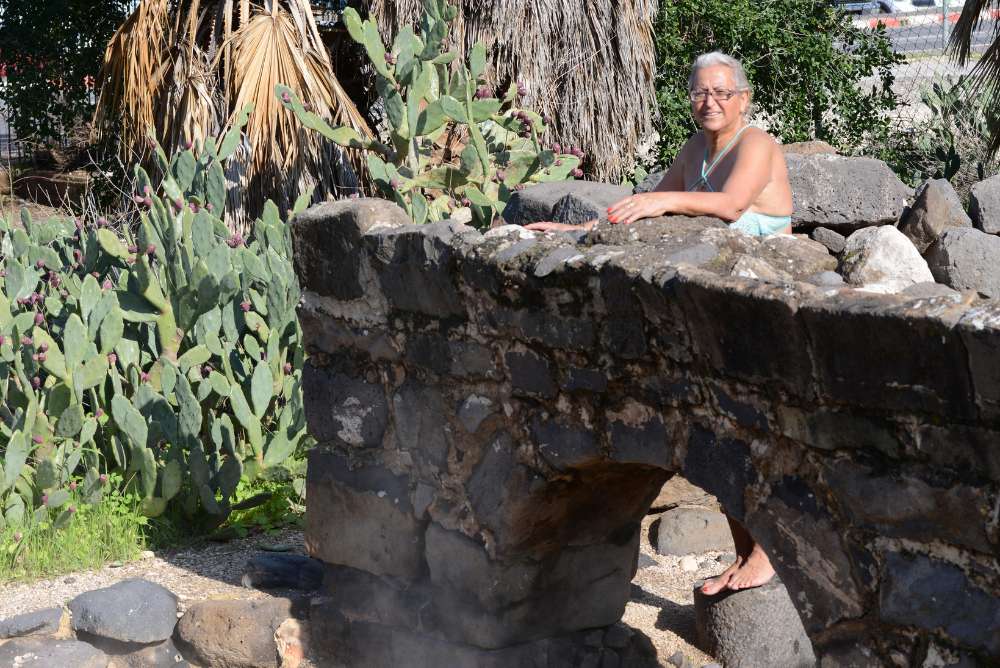
Let’s start by not confusing this site with “Hamei Tiberias” (Tiberias Hot Springs), the modern spa complex located right across the street. While they both feature hot springs, Hamat Tiberias National Park is an ancient archaeological site situated along the western shores of the Sea of Galilee (Kinneret) in the city of Tiberias.
Hamat Tiberias is home to 17 natural hot springs, known and used even before the city of Tiberias was founded by Herod Antipas—son of Herod the Great—who named the city after the Roman Emperor Tiberius.
Legend has it that King Solomon sent demons to heat the waters underground, made them deaf so they wouldn’t know of his death, and to this day, they supposedly still keep the springs warm. Folklore aside, these springs have been known for their curative properties for centuries.
According to the Jerusalem Talmud, a village named Hamat (meaning “hot springs”) once existed separately from Tiberias. Archaeological remains include Roman-era baths and saunas from the 1st century CE. After decades of drought, the hot springs have begun to flow again, though one main spring reaches 60°C, making it unsuitable for bathing.
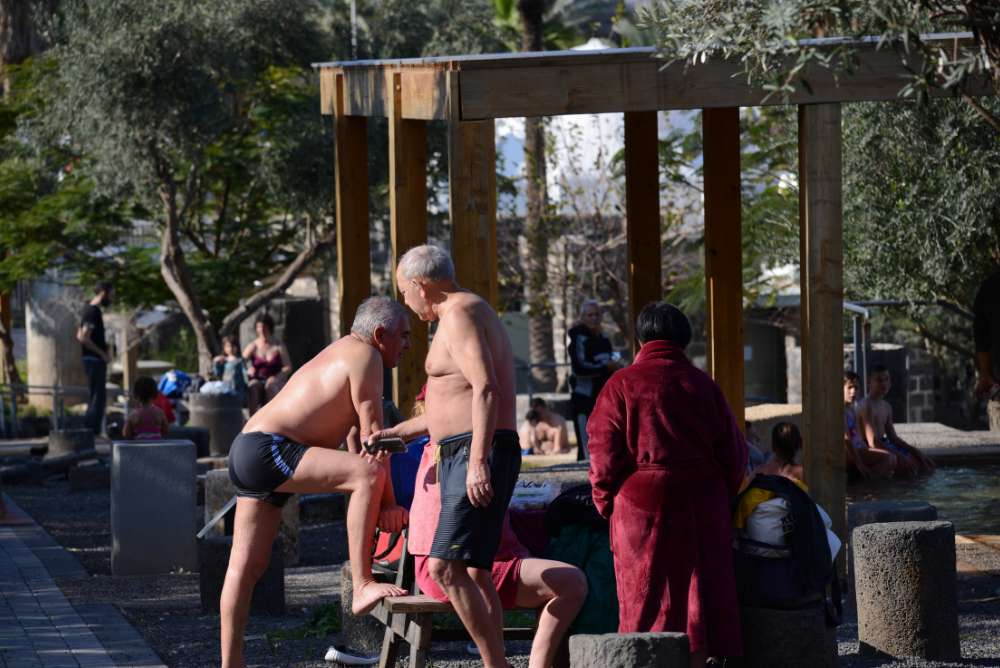
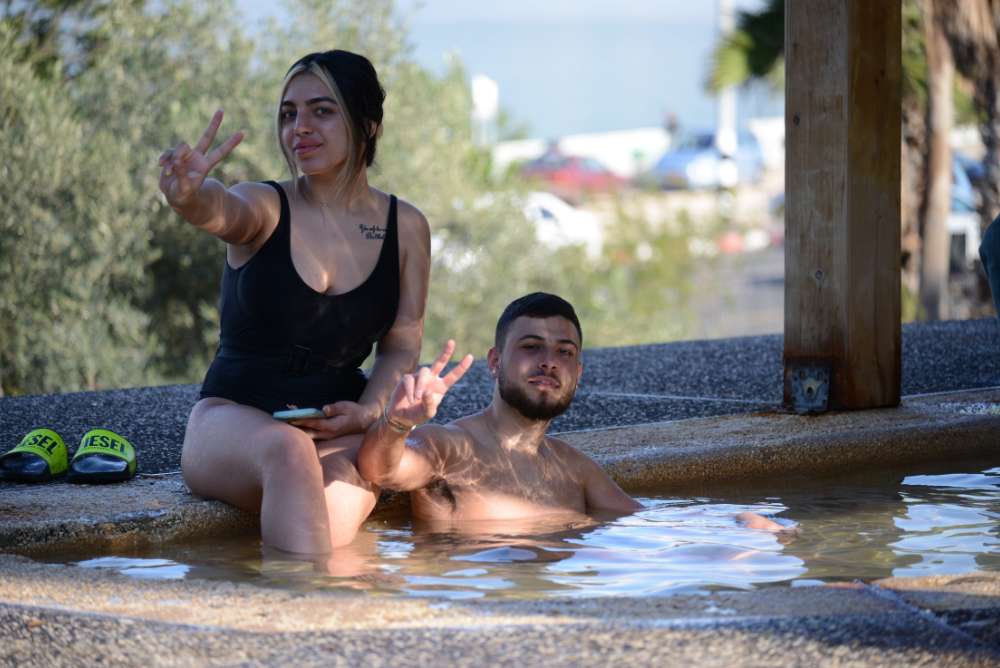
Luckily, the park also offers three outdoor pools of naturally heated spring water, kept at pleasant 40°C, 35°C, and 30°C—perfect for soaking, especially on cold winter days. The site was renovated in 2013 with the help of private donors, and the facilities, including showers, are well maintained. Entry costs just 20 NIS per adult.
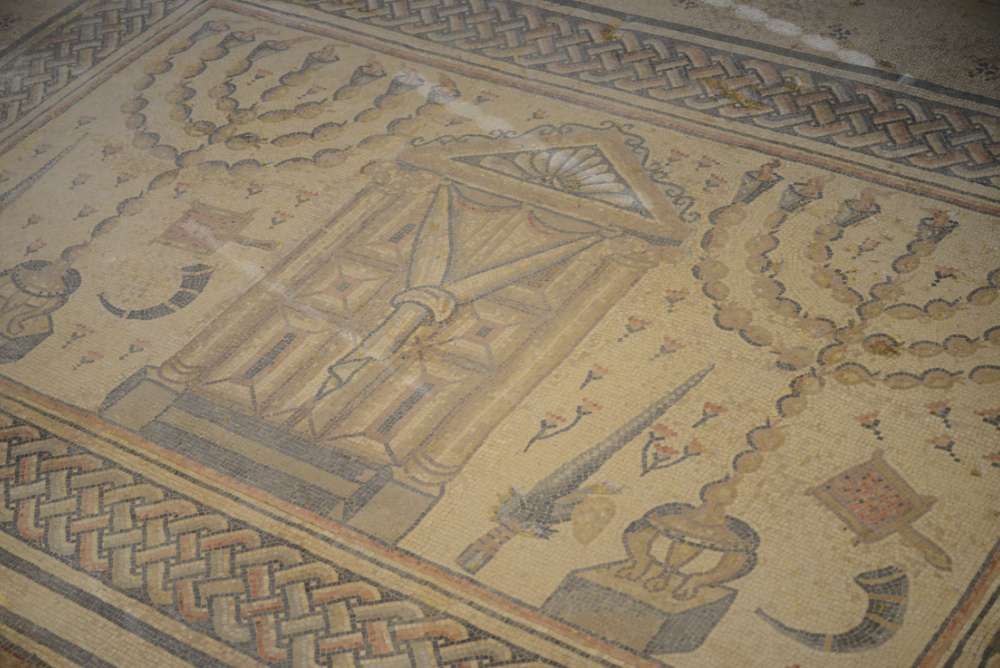


The Ancient Severus Synagogue and Zodiac Mosaic at Hamat Tiberias
One of the park’s highlights is the remains of an ancient synagogue, dating back to the 3rd century CE, when Tiberias served as the seat of the Sanhedrin, the spiritual center of Judaism after Jerusalem’s destruction. The synagogue was rebuilt four times, due to earthquakes and Ottoman-era destruction.
Its spectacular mosaic floor features:
- A southern panel showing the Temple in Jerusalem with Jewish symbols: a menorah, shofar, and The Four Species (Arba’at HaMinim) used during the Jewish holiday of Sukkot.
- A central zodiac panel with the 12 signs surrounding Helios, the sun god—reflecting Roman artistic influence. The seasonal goddesses appear in each corner.
- The Hebrew inscriptions are charmingly flawed: the word for Aquarius (“Dli”) is shown upside down and reversed—proof the mosaic artist probably wasn’t fluent in Hebrew!
The synagogue is often called the “Severus Synagogue” after a Greek inscription on the mosaic’s northern side that reads:
“Severus, the student of the most illustrious patriarchs.”

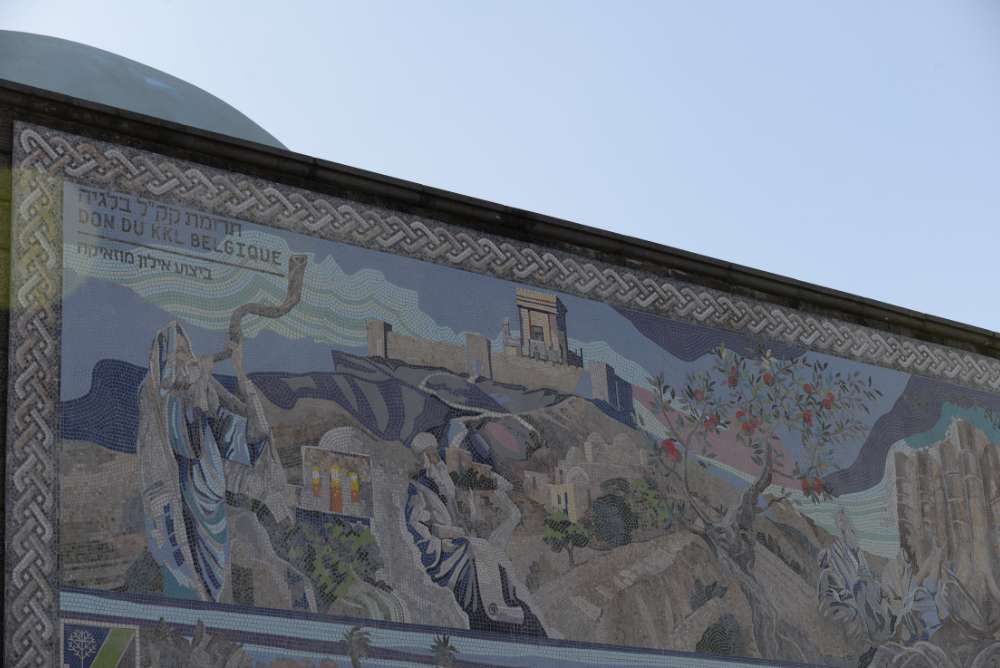
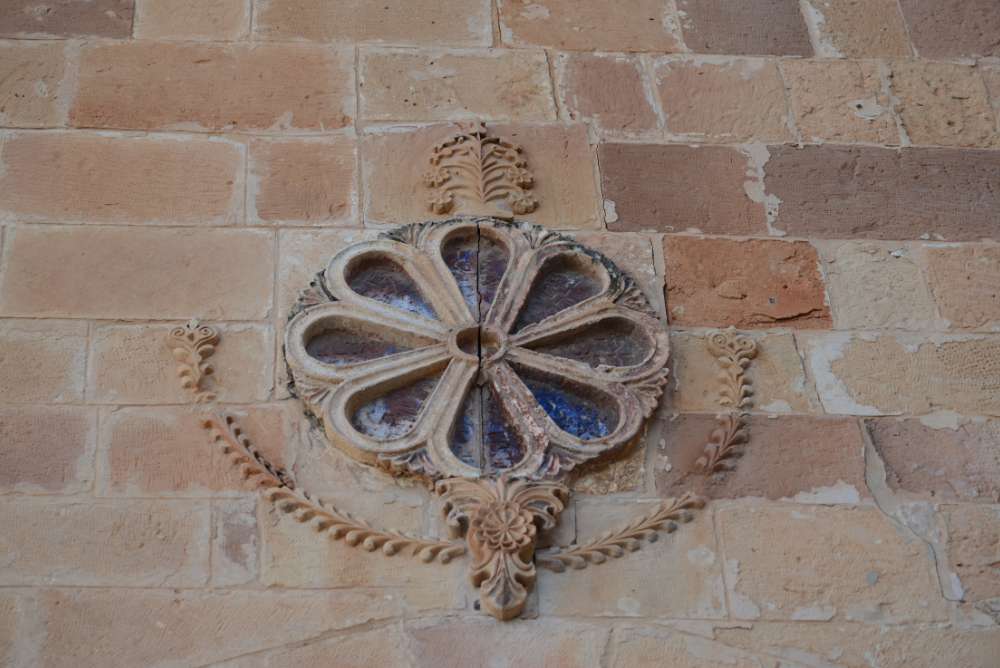
Rabbi Meir Ba’al HaNes Sacred Tomb
Just a one-minute walk uphill from the park is the tomb of Rabbi Meir Ba’al HaNes, known as the miracle maker. It’s a major pilgrimage site especialy at Second Passover where Jewish followers pray, and give money to charity.
The traditional identification of the tomb as the burial place of Rabbi Meir Baal HaNes is connected to a famous miracle described in the Talmud.
According to the story, Roman soldiers pursued Rabbi Meir but were miraculously struck with blindness. In another part of the story, Rabbi Meir promised a Roman guard who helped rescue his sister-in-law from a brothel—where the Romans had imprisoned her as punishment—that he would be saved if he called out: “God of Meir, answer me!” (Elaha d’Meir Aneini). The promise was fulfilled.
Because of this Talmudic story, a popular tradition developed that Rabbi Meir would bring divine help to those who donated money to the poor of the Land of Israel in his memory. According to tradition, while giving charity, worshippers recite the famous words associated with Rabbi Meir’s miracle:
“Elaha d’Meir Aneini” — “God of Meir, answer me.”
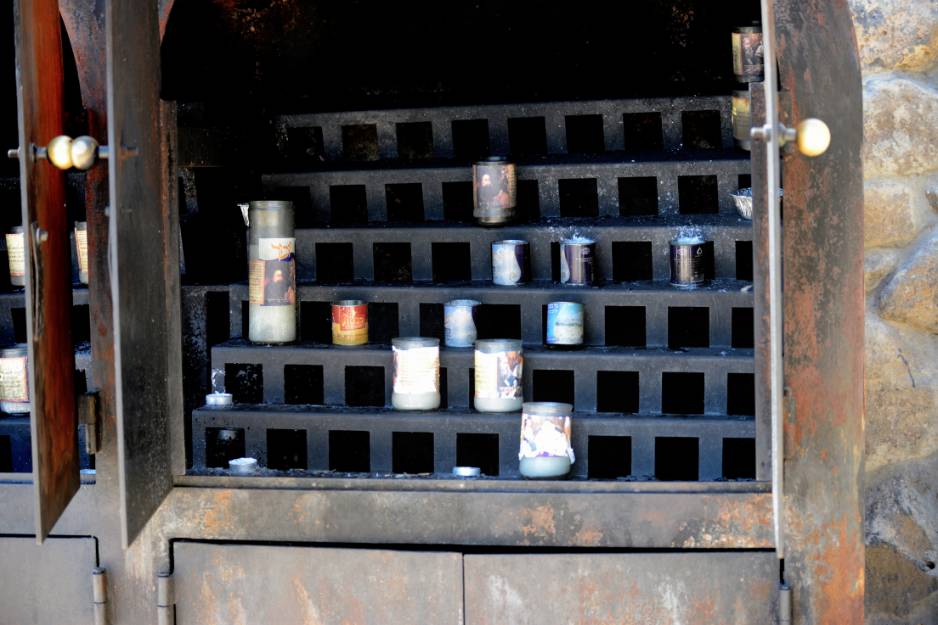
The Tomb of Maimonides, the Ramba”m, in Tiberias
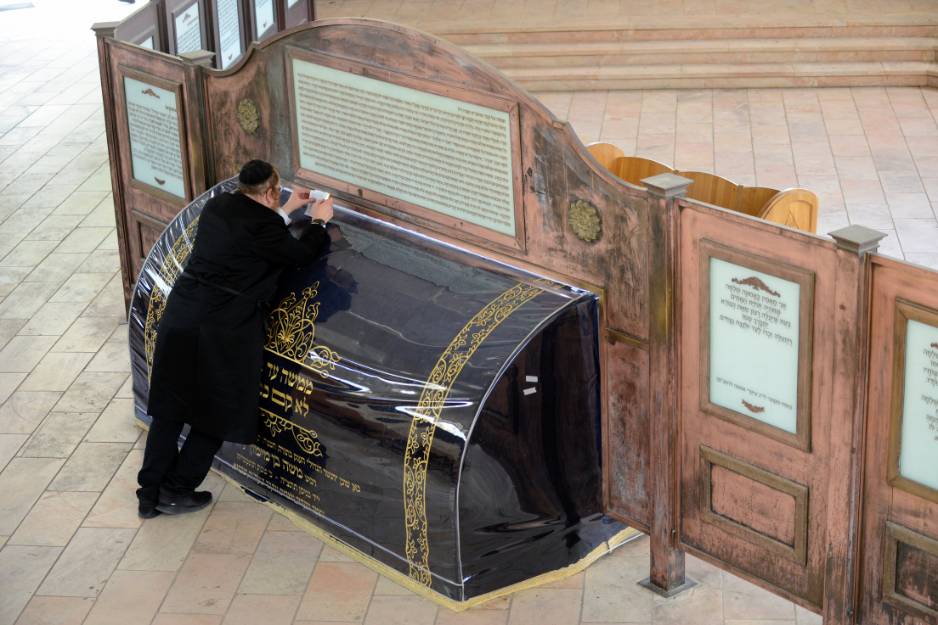
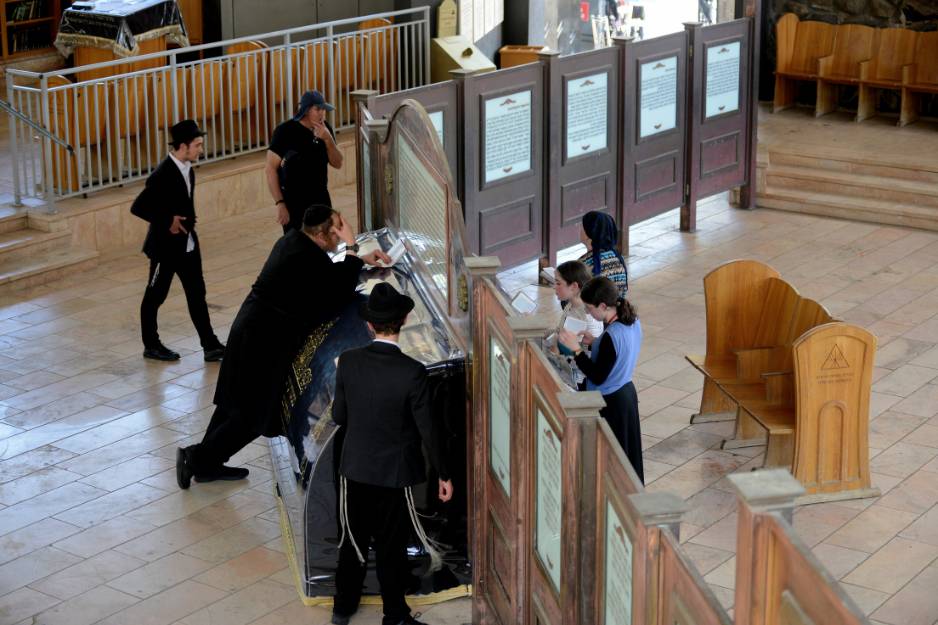
The Tomb of Maimonides in Tiberias is the final resting place of Rabbi Moses ben Maimon—better known to the world as Maimonides or in hebrew the Ramba”m. One of the greatest Jewish scholars and legal authorities of all time, Maimonides was also a brilliant medieval philosopher, physician, and true man of many talents. Of him it was famously said: “From Moses (Moshe Rabbeinu) to Moses (Ramba”m), there arose none like Moses.” He was also known as “The Great Eagle,” a symbol of his towering wisdom and influence on generations of Jewish scholars.
Among his iconic works is the Mishneh Torah, his monumental code of Jewish law. In Hebrew, it is also known as Yad HaHazaka—“The Strong Hand”—a name connected to the numerical value of the Hebrew letters Yad, fourteen, representing the work’s 14 books. He also wrote The Guide for the Perplexed, a groundbreaking philosophical work dealing with difficult questions of faith, reason, and religious belief.
Maimonides was born in Córdoba, Andalusia, Spain. Fleeing Islamic religious persecution, his family eventually reached Fez in Morocco. He later sailed to Acre and spent several months in the Holy Land before continuing to Egypt and settling in Fustat, near present-day Cairo.
His influence reached Jewish communities far beyond Egypt, including the Land of Israel and Yemen. Such was their admiration that Yemenite Jews added his name to the Kaddish prayer, traditionally recited by mourners.
Maimonides strongly believed that Torah study should not be used as “a spade with which to dig” for personal profit. After his brother David, who had financially supported the family, tragically drowned during a trading voyage in the Indian Ocean, Maimonides turned to medicine for his livelihood.
He became one of the most respected physicians of the medieval world and served the ruling court in Egypt. His medical philosophy sounds surprisingly modern even today: good hygiene, healthy food, regular exercise, balanced daily habits, and medicine when necessary.
Maimonides died in Egypt at the age of 66. According to tradition, his remains were brought to Tiberias, In accordance with his final request.
Without a doubt, Maimonides was one of the greatest Jewish minds of the Middle Ages—a true Renaissance man centuries before the Renaissance even began.
The tomb complex in Tiberias is open to visitors and admission is free. The prayer area has separate sections for men and women.
A surprisingly small place for such a remarkably great man.


Susita – The Hidden Roman City Above the Sea of Galilee
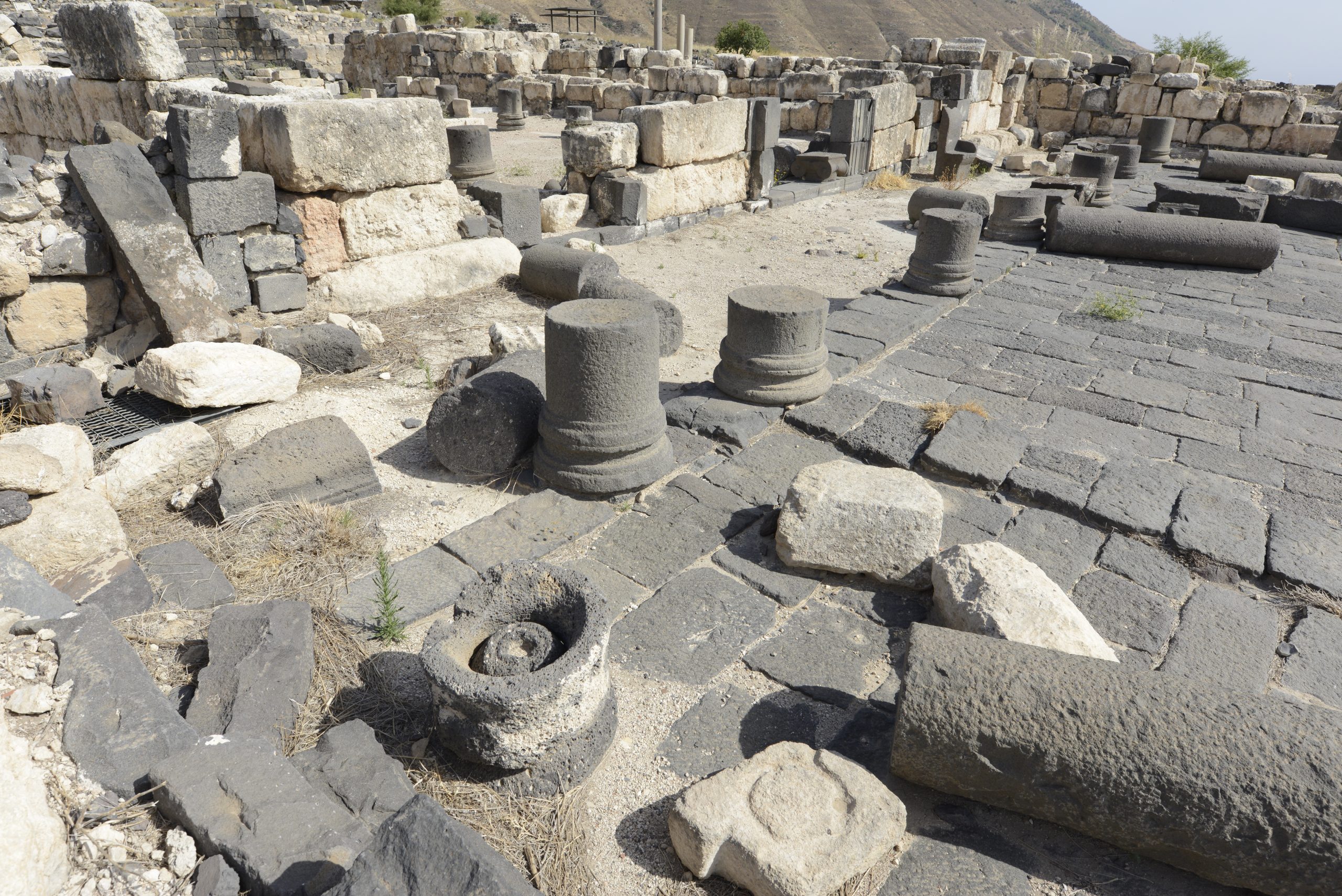
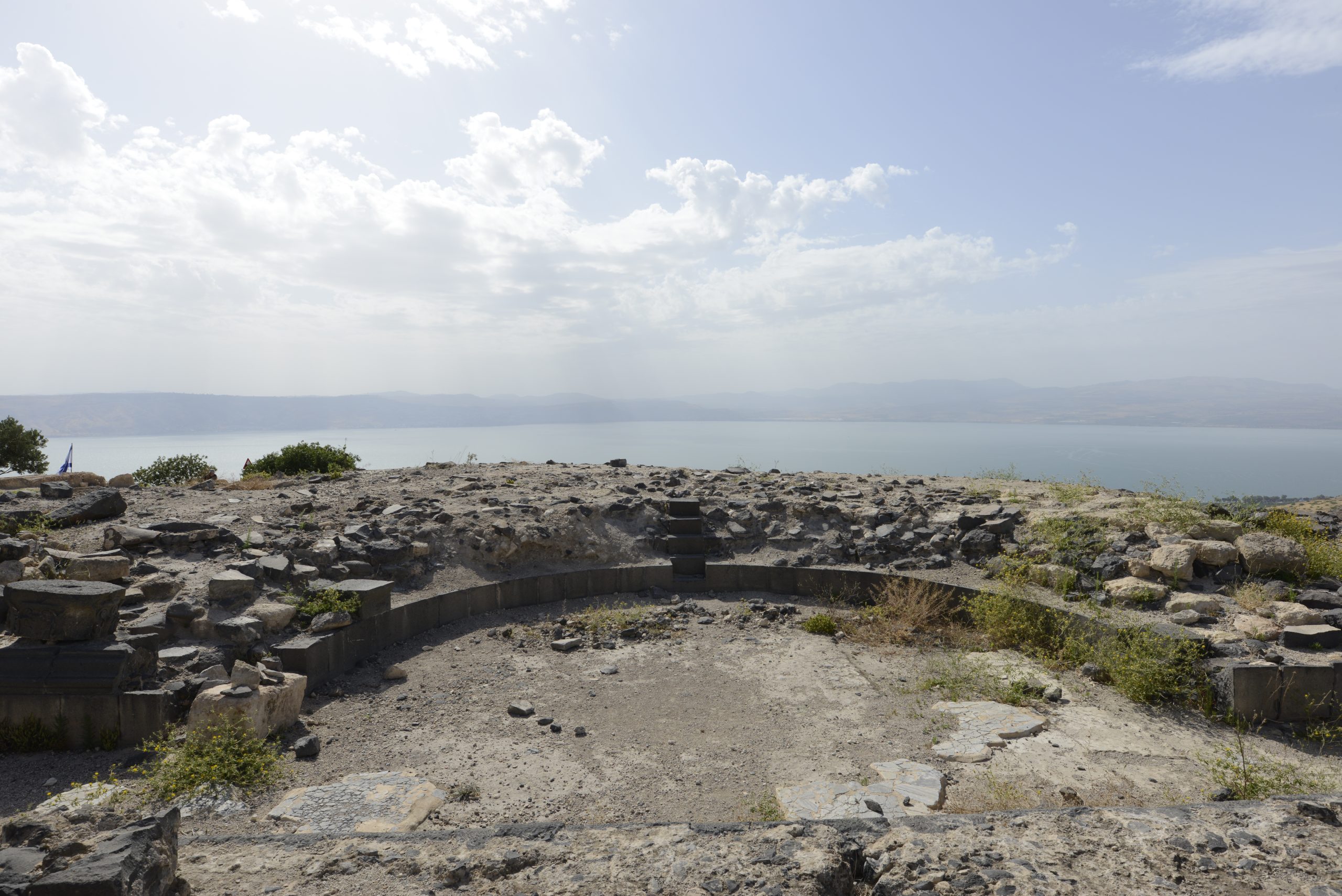
Susita, officially opened to the public in 2023, is an extraordinary archaeological site perched on the eastern cliffs of the Sea of Galilee, just a 10-minute drive from the city of Tiberias. This ancient city was originally established during the Hellenistic period in the 2nd century BCE and reached its peak during the Roman and later Byzantine eras.
Built atop a strategic ridge resembling a horse’s saddle, Susita (meaning “horse” in Hebrew, and known as Hippos in Latin) offers stunning panoramic views over the lake. Its unique location sits directly along the African-Syrian tectonic fault line, which caused two devastating earthquakes in its history. The second, in January 749 CE, ultimately led to the city’s abandonment and it was never rebuilt.
Susita coexisted with nearby Tiberias from the 1st century CE. While Tiberias served as a major Jewish cultural center, Susita was part of the Decapolis—a group of ten Greco-Roman cities that embraced a non-Jewish, Hellenistic lifestyle under Roman rule. The remains uncovered here include all the hallmarks of a Roman city: a forum, basilica, public baths, churches, an odeon (small theater), and more.
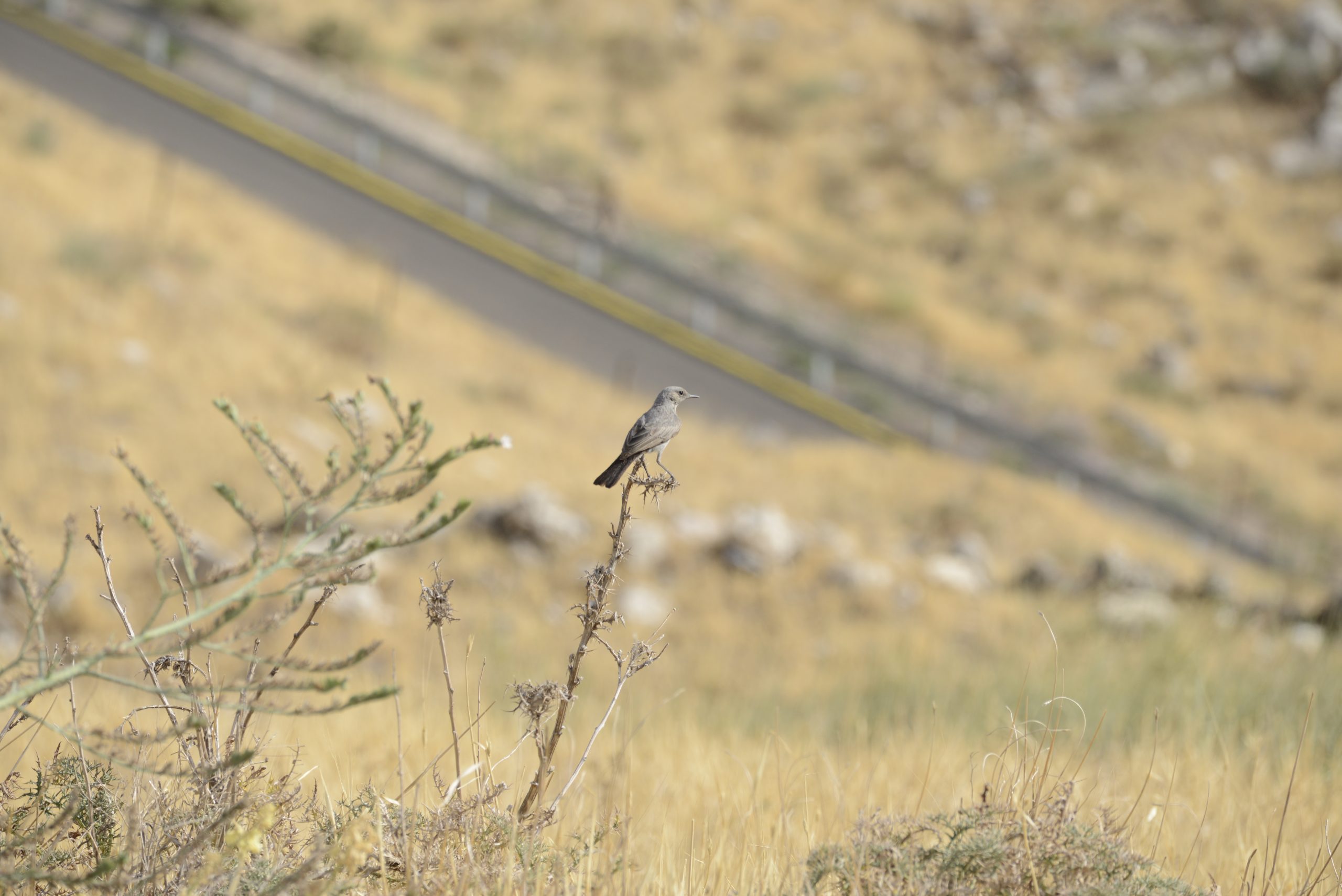
Excavations began in 2000 and have continued steadily since, revealing layers of urban life, architecture, and art. Today, the site is not only a historical treasure but also a haven for nature lovers, especially between May and July, when colorful bee-eater birds nest along the slopes.
Still relatively undiscovered by mass tourism, Susita is one of the Sea of Galilee region’s best-kept secrets—a magical blend of history, landscape, and serenity.


The Horns of Hattin
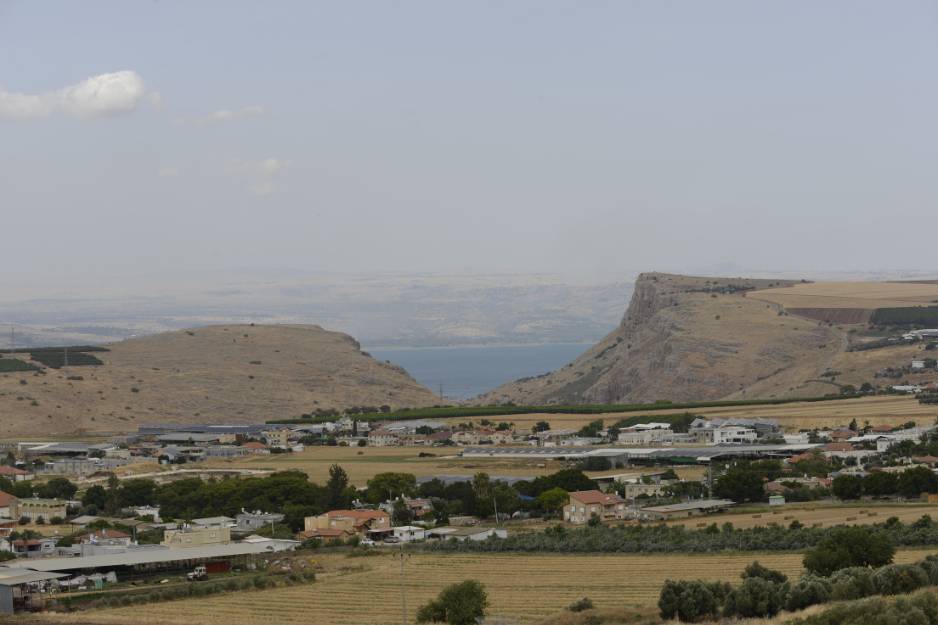
The Horns of Hattin (Hebrew: Karnei Hittin) is an extinct volcano in the Lower Galilee, near Mount Arbel and right beside Nabi Shu’ayb’s tomb—a sacred Druze site believed to be the resting place of Jethro, Moses’ father-in-law.

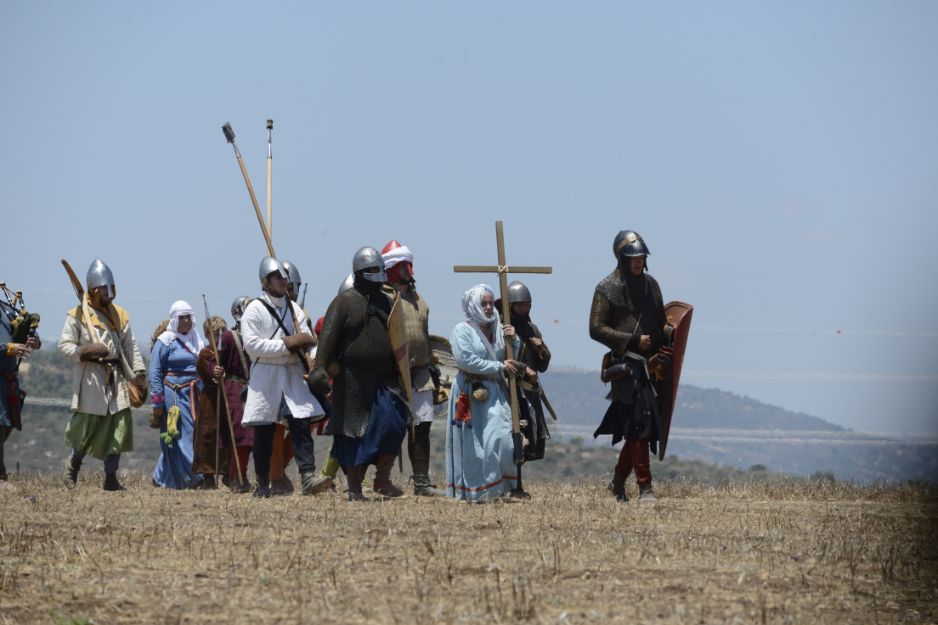
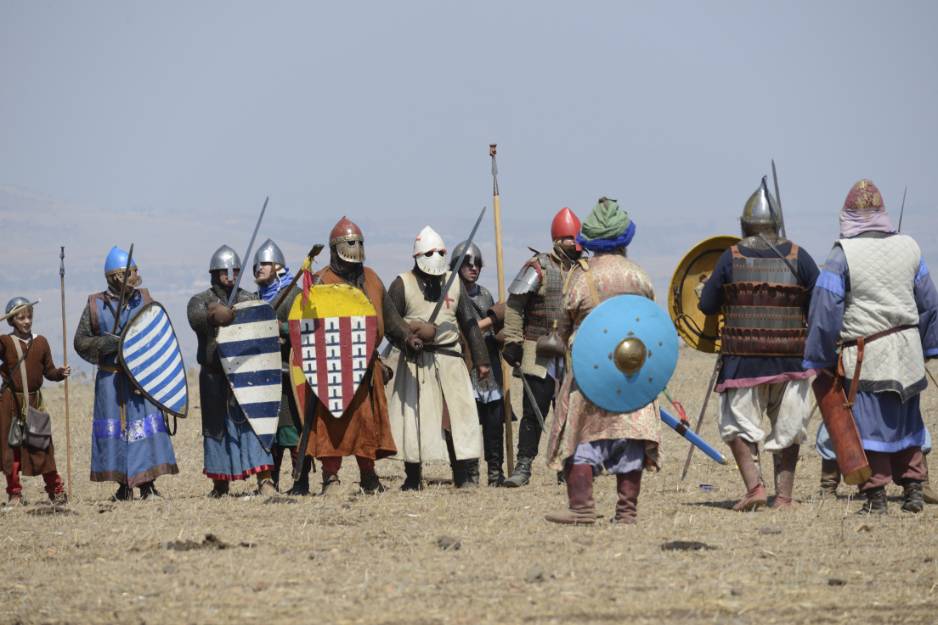
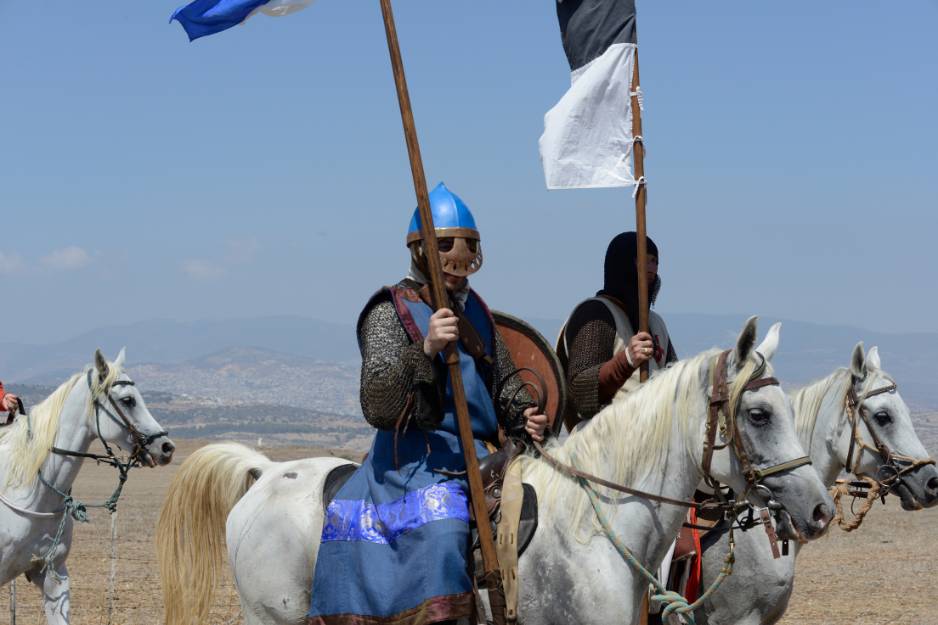
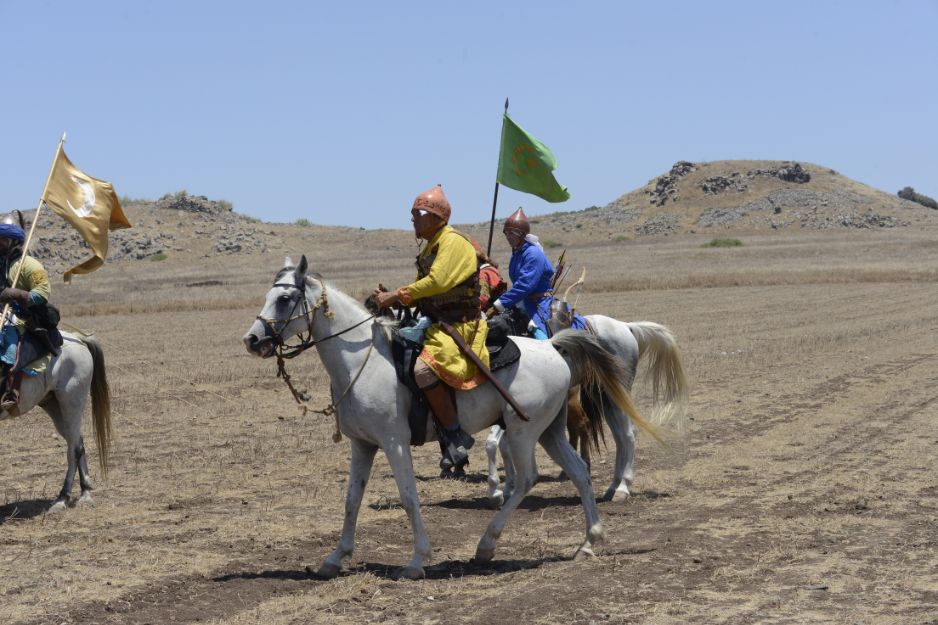


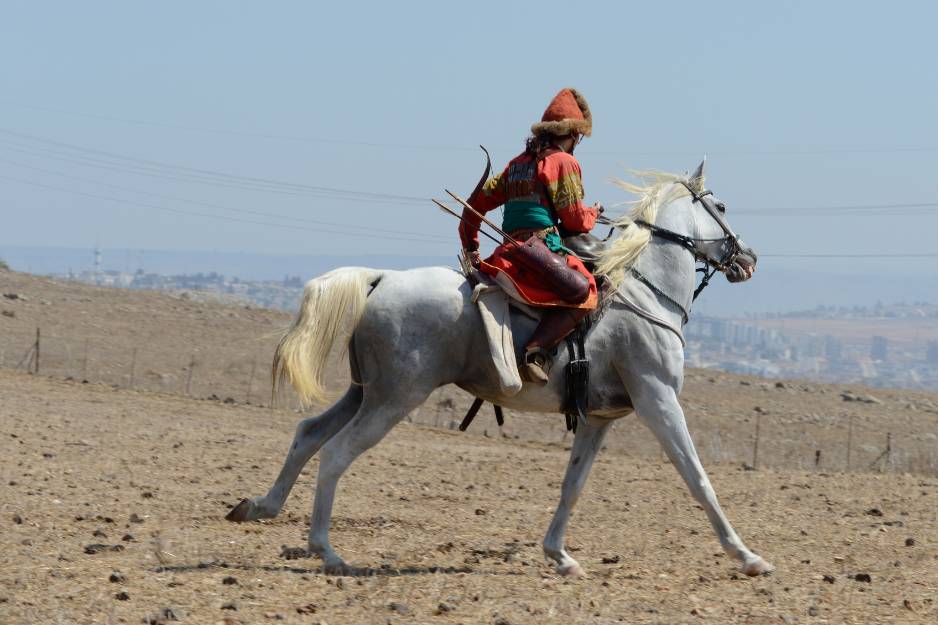

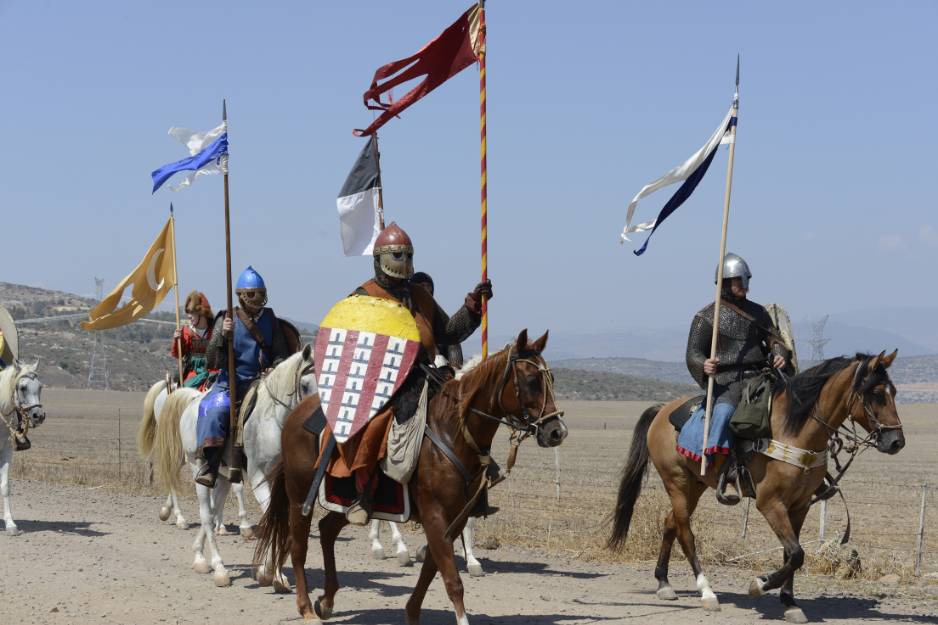

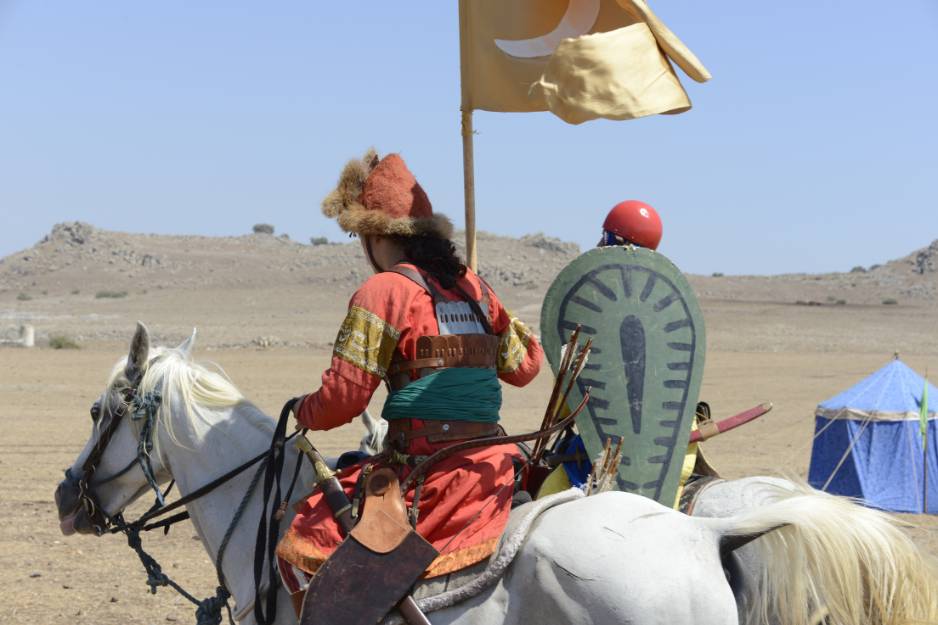
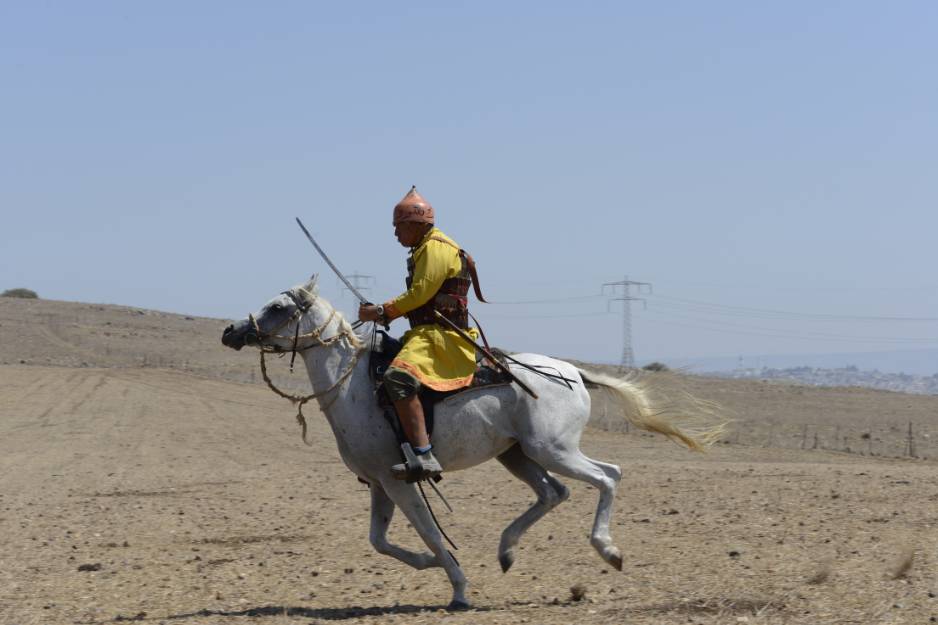
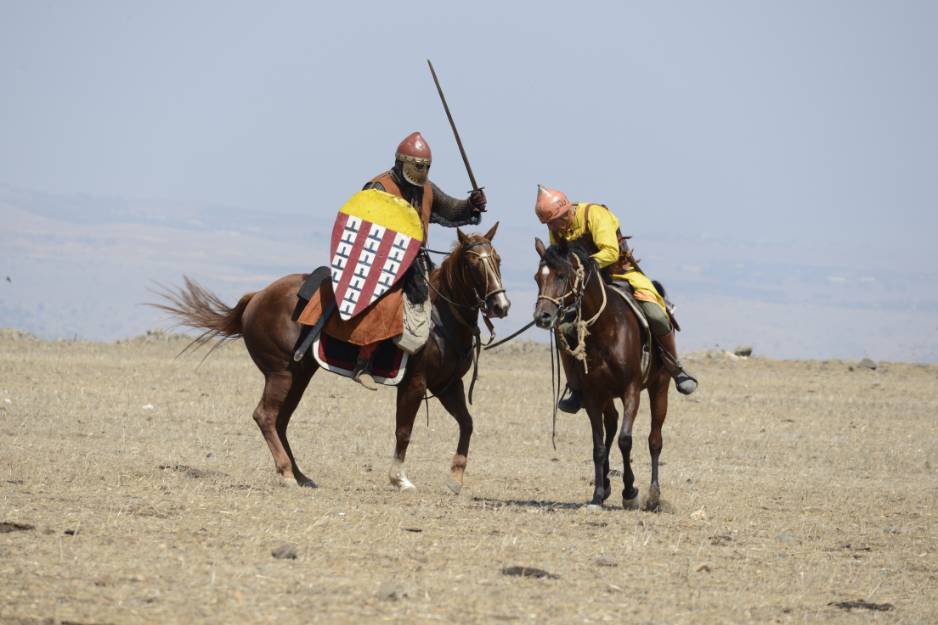

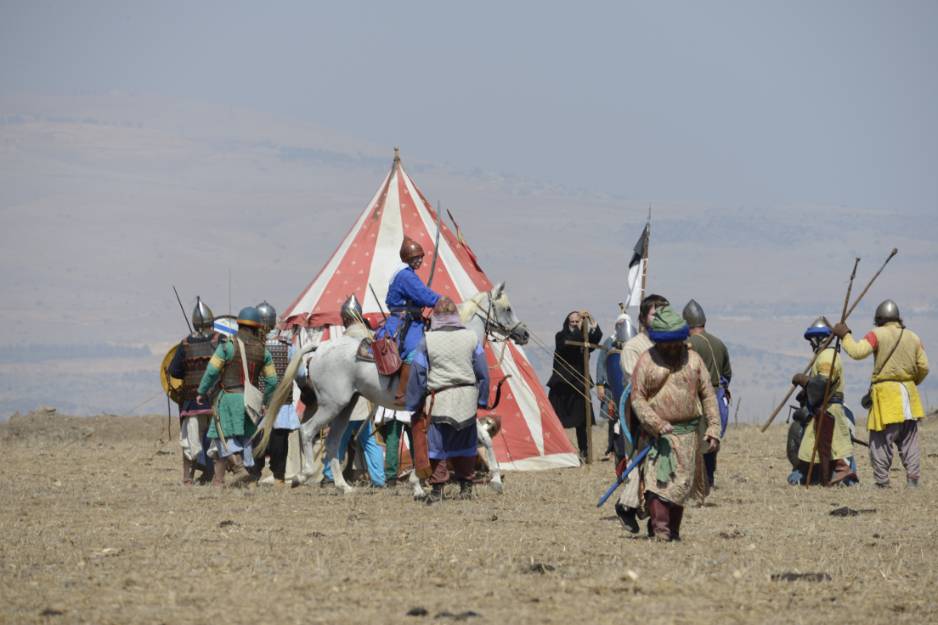
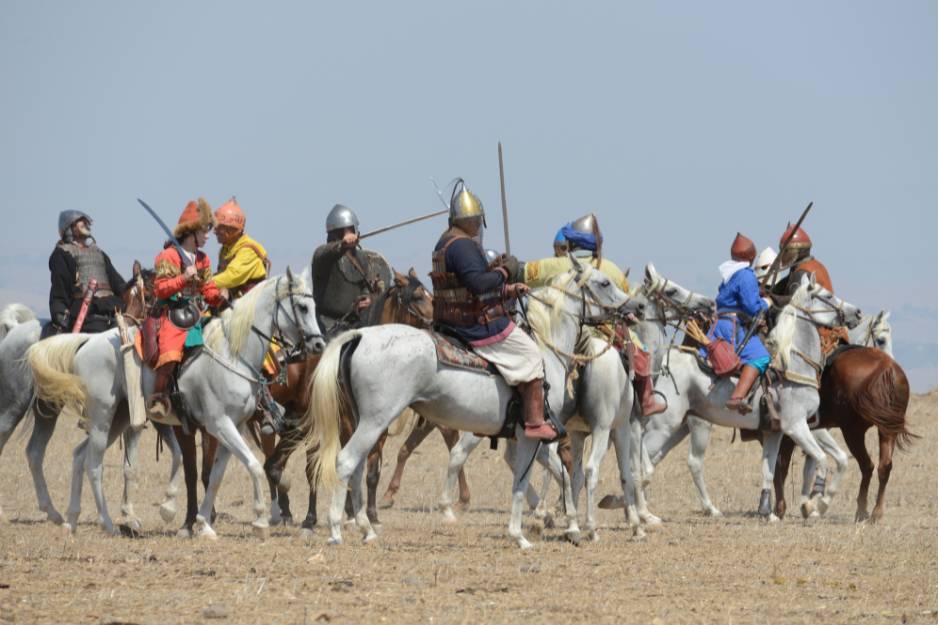
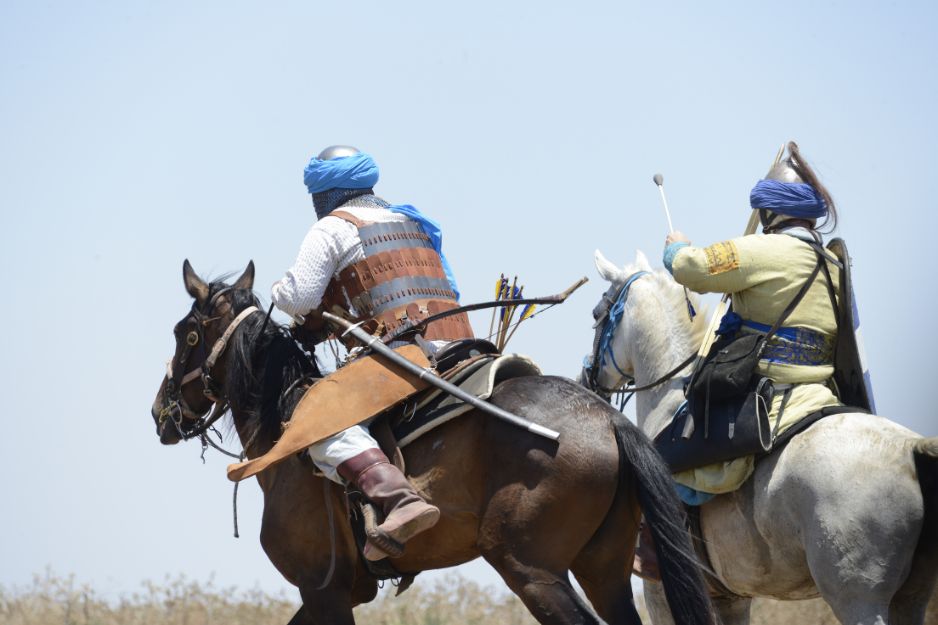
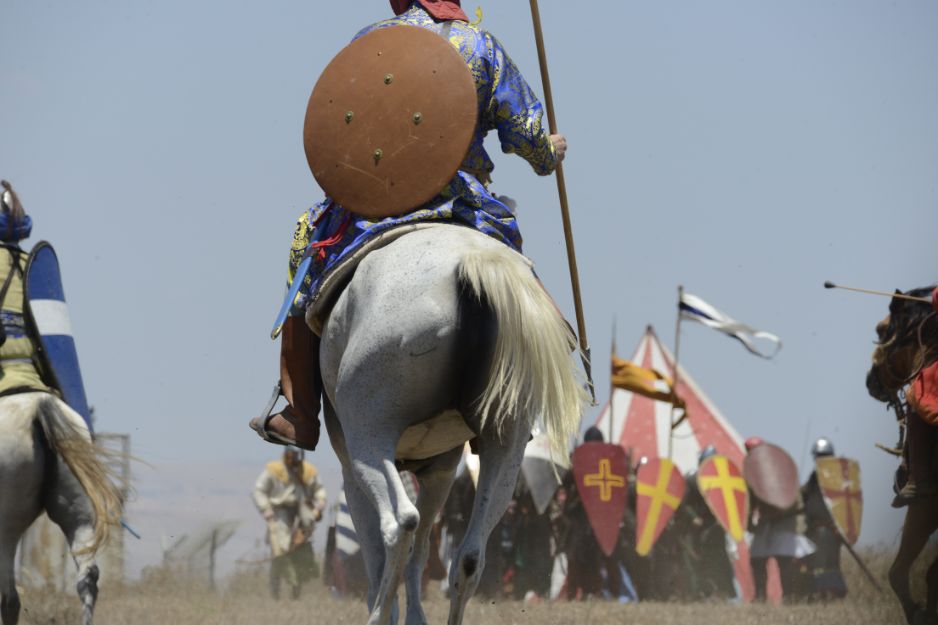
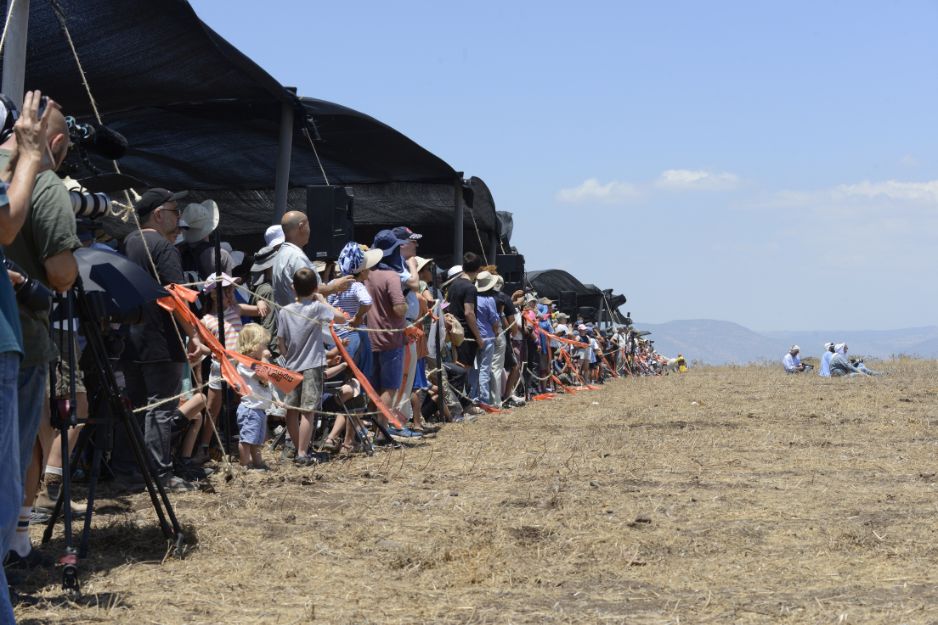
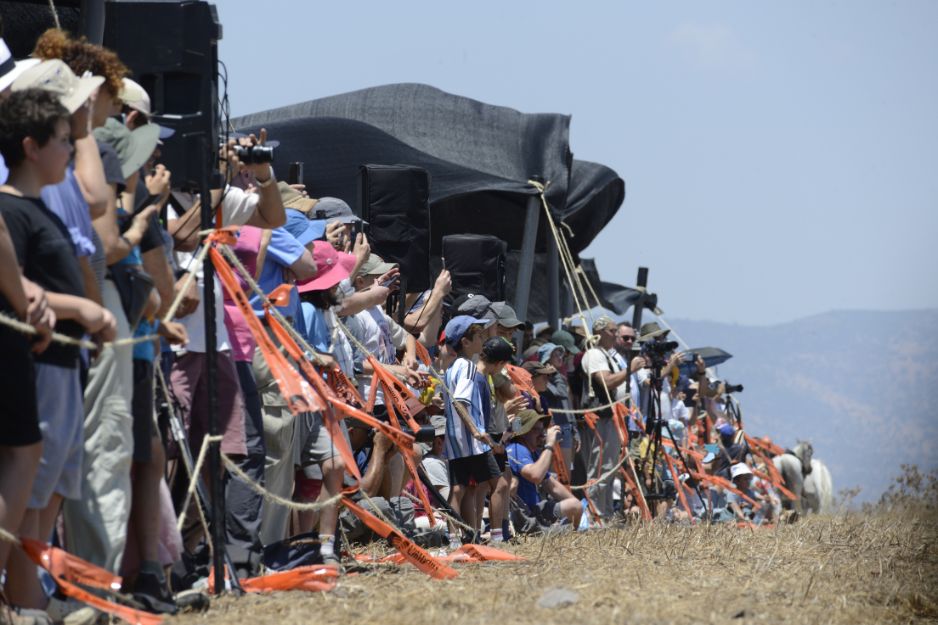
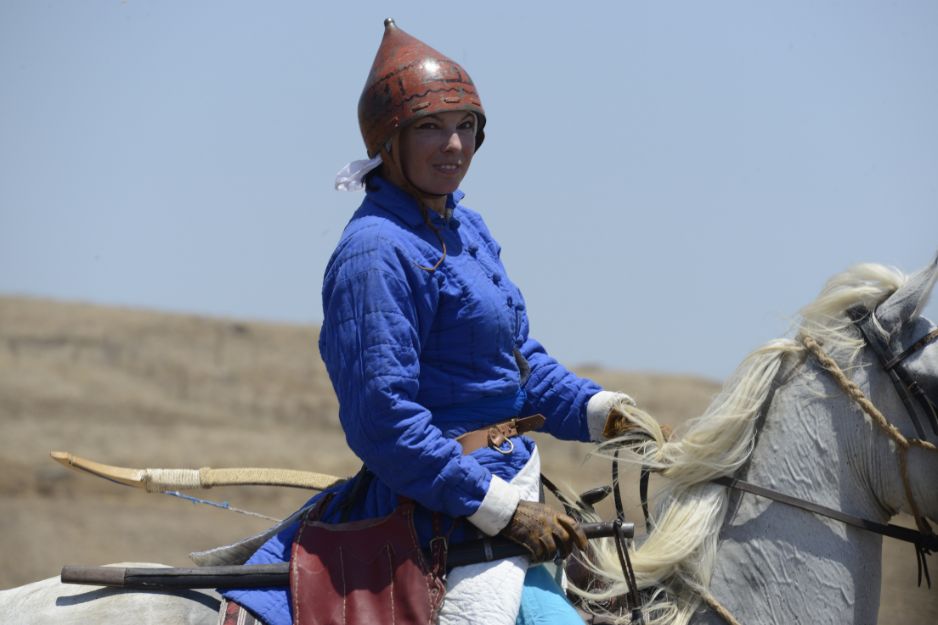
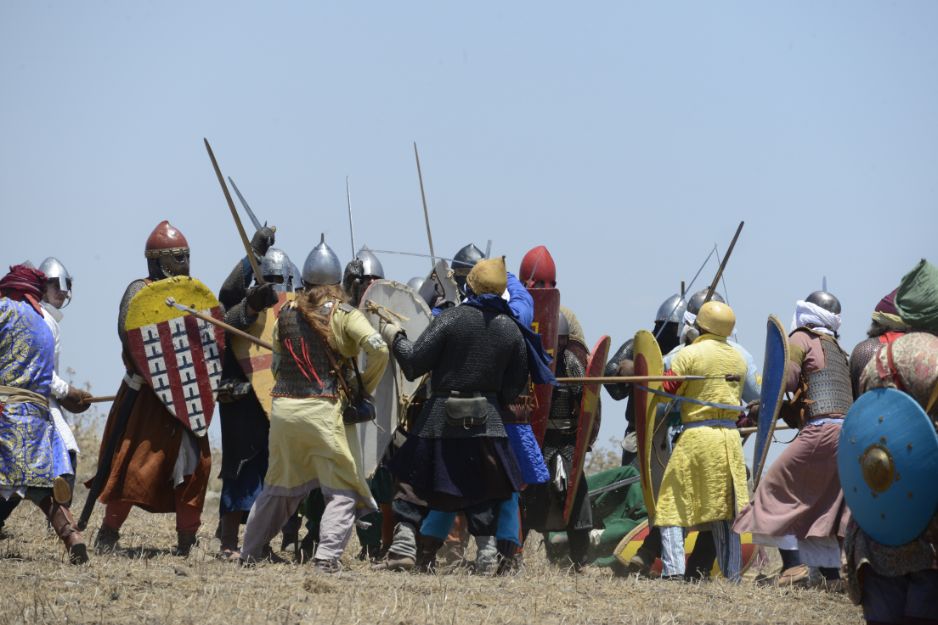
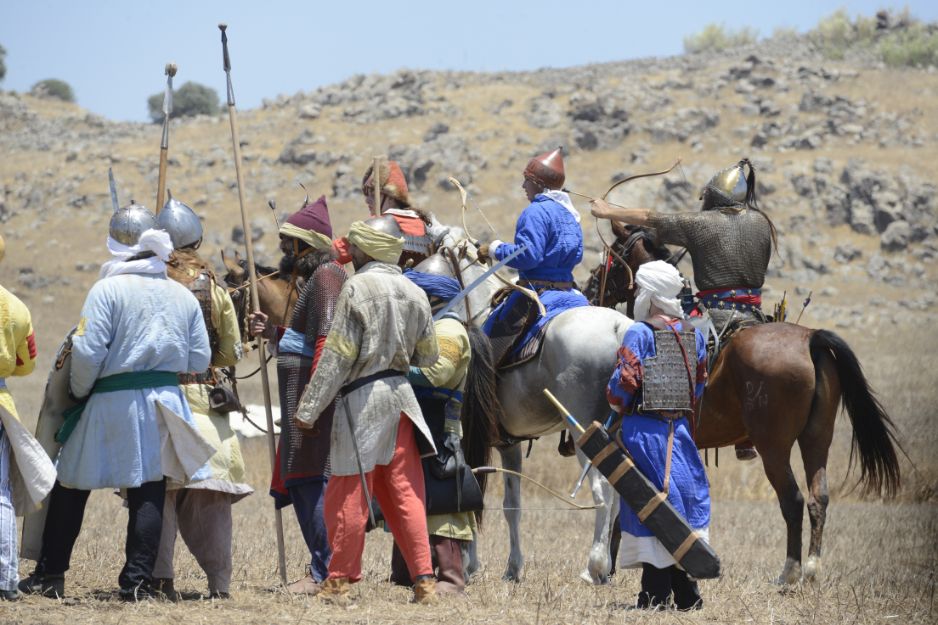
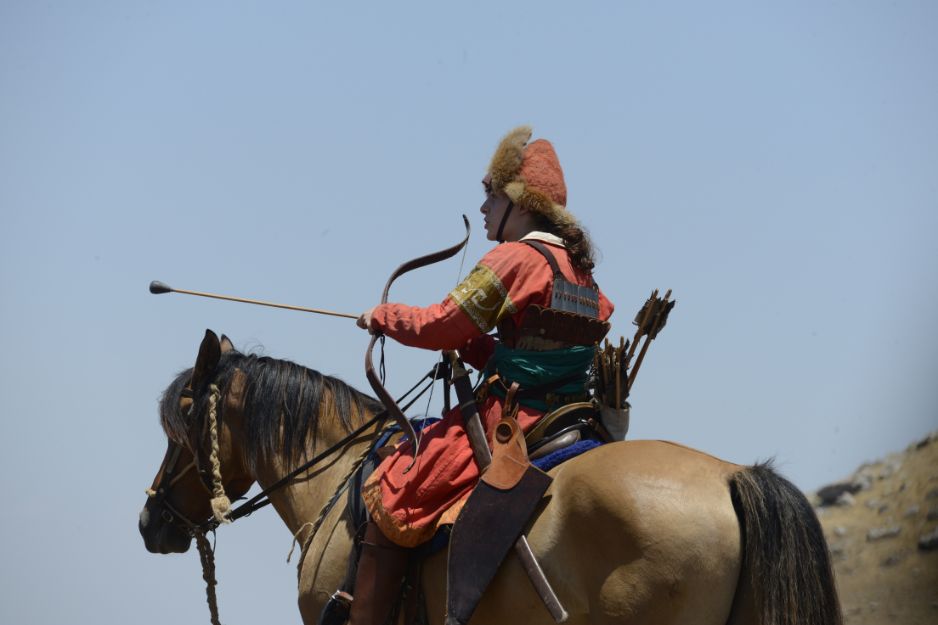
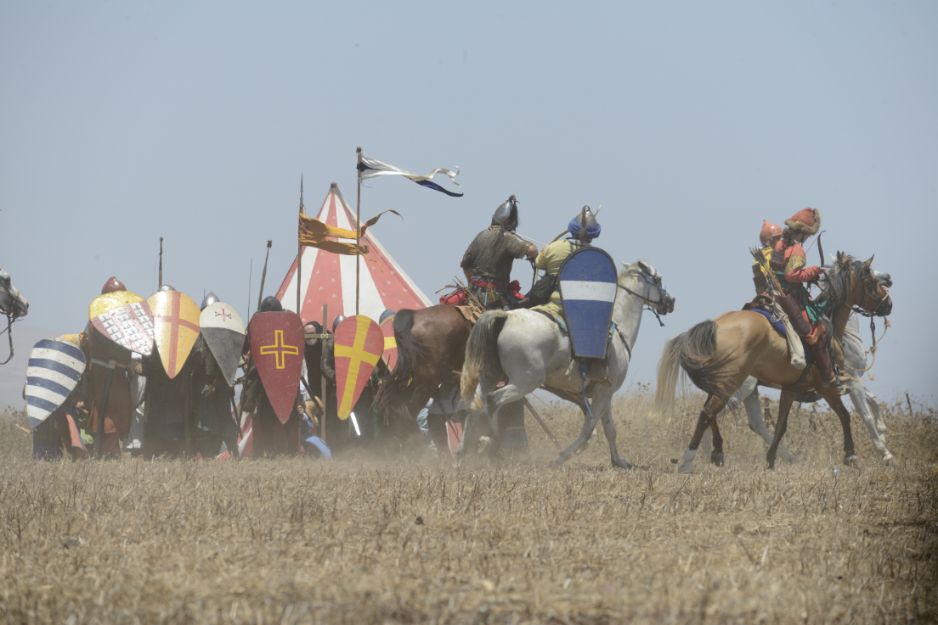
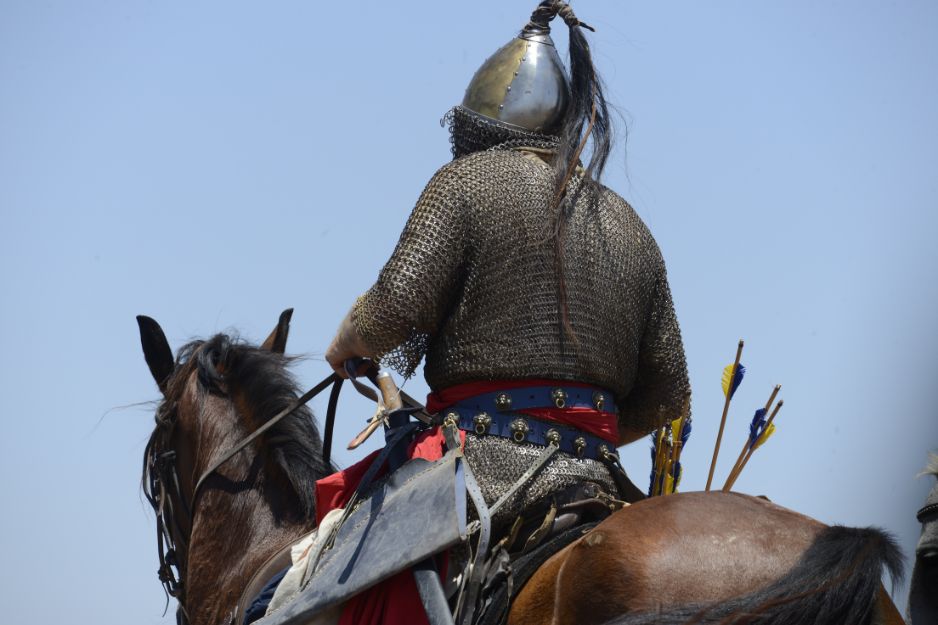
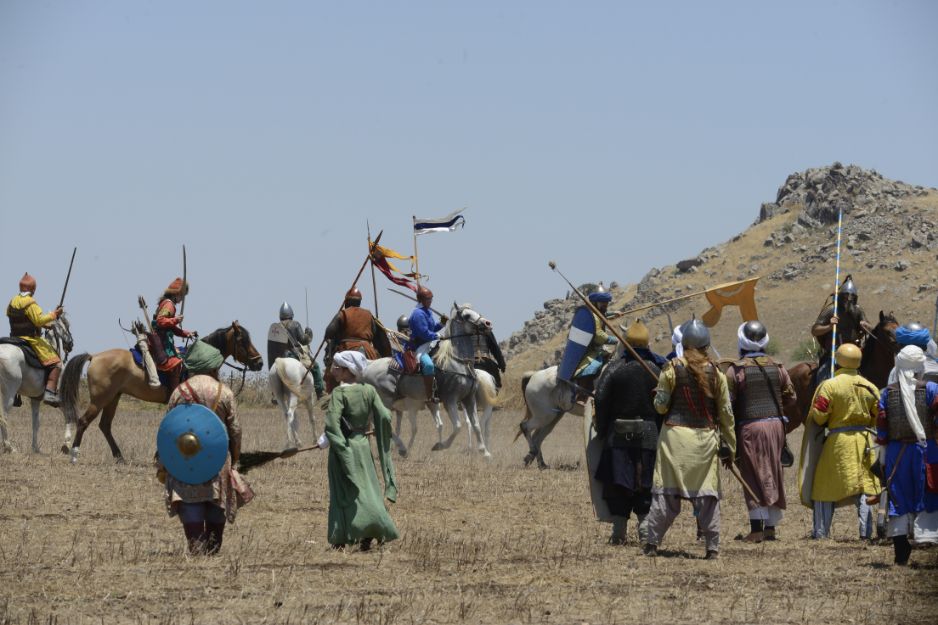
During the Crusader period, the site held little importance and stood deserted. But on July 4, 1187, history was made here: after a grueling 25 km march in just 48 hours under the blazing summer sun from Tzippori near Nazareth, the Crusader armies clashed with Saladin’s forces, advancing from the Jordan River crossings by the Sea of Galilee south of Tzemach. The Crusaders were decisively defeated, with the surviving knights fleeing to the southern summit, where they ultimately surrendered.
The Battle of Hattin marked the beginning of the downfall of the Crusader kingdom in the Holy Land. Today, every July 4th, the historic clash is reenacted to honor this turning point in history. with entry through Kibbutz Lavi, Tickets cost 40 NIS per adult needs to be buy in advance.

Nabi Shu’ayb
Nabi Shu’ayb sits just 1 km northwest of the Horns of Hattin—but you’ll need to take a winding road to reach it. According to Druze tradition, Jethro, Moses’ father-in-law, spent his final days in a cave here, where he died peacefully. His followers buried him on the spot and marked the grave with a monument.
Another Druze legend says that the night before the Battle of Hattin, Saladin dreamed of an angel who promised him victory. After his win, Saladin rode west, discovered Jethro’s resting place, and the Druze built the shrine there.
Today, Nabi Shu’ayb is the holiest Druze site in the Galilee and is also respected by Jews. Every year, starting on April 24, thousands of pilgrims gather for the four-day Nabi Shu’ayb festival. At the heart of the complex stands a large building with a central shrine, welcoming worshippers and visitors alike.
Sea of Galilee Beaches: The Best for Last
One of the Sea of Galilee’s biggest attractions is its beautiful beaches and the chance to cool off in its refreshing waters—a perfect escape on a hot summer day. And make no mistake, it gets hot here—temperatures can soar up to 45°C in the shade. That’s why we wholeheartedly recommend diving into the breeze waters, soaking up the sun, and firing up the vegan BBQ for the ultimate Galilean chill-out session.
Where to Go: The Best Beaches
- Zemach Beach, located on the southeastern shore of the Sea of Galilee, has recently undergone a full renovation. It is now designated as a quiet beach—no music, no BBQs—offering a more peaceful atmosphere. The beach features lush greenery, well-maintained showers, and a relaxed, family-friendly vibe.
- On the eastern side one popular spot is Gofra Beach—fully equipped with lifeguards, a mini-market, public showers and restrooms, accessible paths, and designated BBQ and camping areas. It’s perfect for families and groups looking for comfort and convenience.